Types of Quick Love Messages for Busy Couples
Types of Quick Love Messages for Busy Couples
Quick love messages are short, heartfelt expressions designed to convey affection in under 10 seconds of reading time, making them the most practical tool busy couples have for staying emotionally close. The best types of quick love messages fall into five clear categories: morning affirmations, midday check-ins, playful notes, gratitude messages, and just-because texts. Research confirms that short messages hit harder emotionally because they avoid overwhelming your partner and are far more likely to be reread. Personalization, timing, and tone determine whether a quick note lands as a genuine connection or gets scrolled past.
1. Types of quick love messages: the five core categories
The five core types of quick love messages are morning, midday, playful, gratitude, and just-because. Each category serves a distinct emotional purpose and works best at a specific point in the day. Message purpose and timing directly influence how well a short text sustains relationship intimacy over time. Knowing which type to send, and when, turns a two-sentence text into something your partner actually remembers.
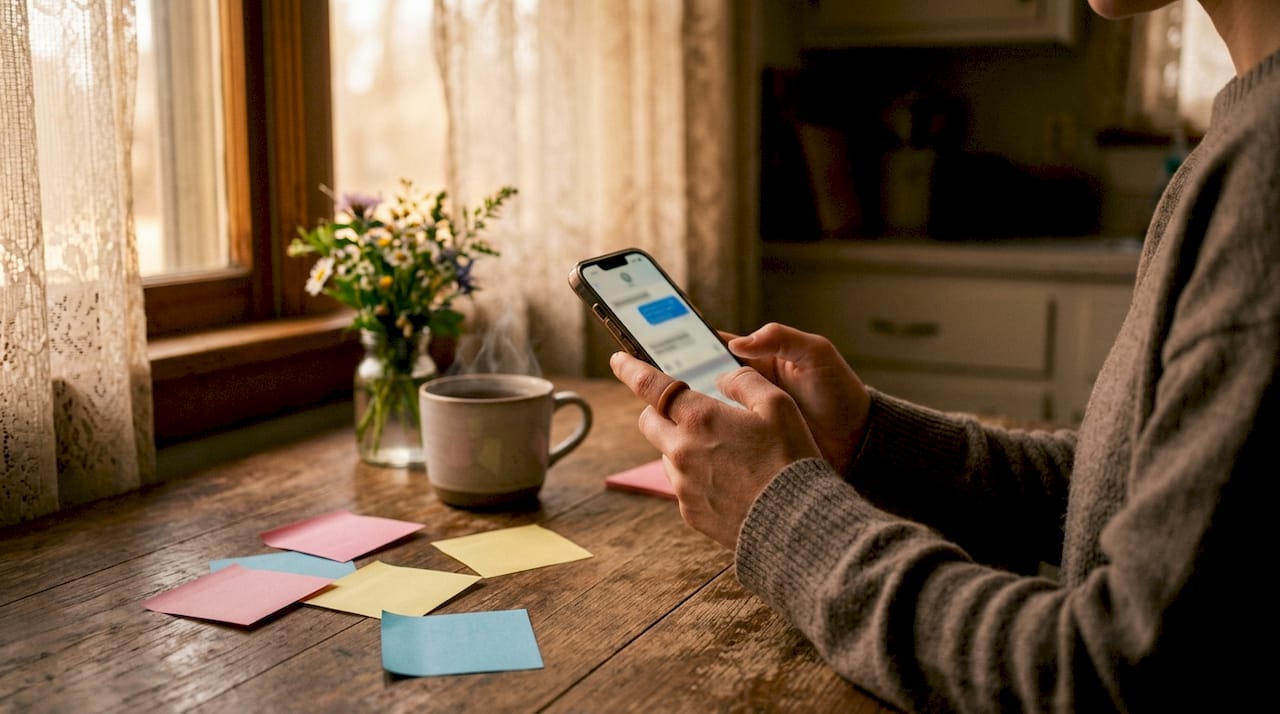
Short messages also work as what relationship communication guides call “distilled confessions.” They carry weight precisely because they are brief. A low-pressure, high-impact message creates emotional connection without asking your partner to stop what they are doing and write a paragraph back.
2. Morning quick love messages: start your partner’s day with warmth
Morning messages work because they arrive before the noise of the day begins. Your partner reads them when their mind is still clear, which means the words stick. Strategic timing in early morning acts as an emotional pattern interrupt, setting a positive tone that carries through the day.
The most effective morning texts are short affirmations, warm greetings, or small encouragements tied to something specific your partner is facing that day. Generic “good morning” texts fade fast. Personalized ones do not.
Strong morning message examples:
- “You’ve got that meeting today. You’re going to own it.”
- “Woke up thinking about you. Hope your day is as good as you are.”
- “Good morning, [nickname]. I’m rooting for you today.”
- “Can’t stop smiling thinking about last night. Have a great day.”
Pro Tip: Send your morning message before 7:30 AM. Messages that arrive after your partner’s day is already in motion compete with emails, notifications, and to-do lists. Earlier means more attention and more emotional impact.
Tie your message to something real. If your partner has a tough presentation, mention it. If they mentioned being tired the night before, acknowledge it. That specificity is what separates a sweet text idea from a forgettable one.
3. Midday quick love messages: thoughtful check-ins that brighten busy moments
Midday messages provide emotional respite during the most stressful part of the workday. Most people hit a wall between 12:00 PM and 2:00 PM. A brief, warm text at that moment functions as a reset, not a distraction.
The key to a good midday check-in is keeping it low pressure. Your partner should not feel obligated to write back immediately. The message should feel like a warm hand on the shoulder, not a conversation starter.
Effective midday message examples:
- “Just thinking about you. No need to reply.”
- “Hope your afternoon is going better than your morning.”
- “Counting down until I see you tonight.”
- “You crossed my mind. That happens a lot.”
- “Sending you a little energy boost. You’ve got this.”
The phrase “no need to reply” is underrated. It removes any guilt your partner might feel about being too busy to respond. That small gesture makes the message feel generous rather than demanding. Avoiding pressure to respond is one of the defining traits of a high-quality quick love note.
Unexpected timing also matters here. A midday text on a Tuesday when nothing special is happening carries more weight than a predictable message on a Friday. Surprise amplifies impact.
4. Playful and flirty quick love messages: keep the spark alive
Playfulness is not optional in a long-term relationship. It is one of the primary ways couples maintain desire and joy over time. Flirty short messages remind your partner that you still see them as attractive, fun, and worth pursuing.
The best playful texts borrow from your shared language. Inside jokes, references to specific memories, and light teasing all work better than generic flirty lines. Shared references like inside jokes transform a generic text into a personal anchor that only the two of you understand.
Playful message examples:
- "Still thinking about that thing you did last weekend. "
- “You owe me a rematch. And dinner. And probably a hug.”
- “I’d swipe right on you every single time.”
- “Warning: I might be slightly obsessed with you.”
- “You looked really good this morning. Just wanted you to know.”
Pro Tip: Emojis do real work in flirty texts. A single well-placed emoji shifts the tone from sincere to playful without adding words. Use them intentionally, not as filler.
Balance matters. Flirty messages work best when they match the energy of your relationship at that moment. If your partner is stressed or going through something hard, a playful text can feel tone-deaf. Read the room before you send.
5. Gratitude and appreciation quick love messages: affirm your partner’s value
Appreciation is the most underused category of quick love notes. Most couples express gratitude in broad strokes. “I love you” is powerful, but “I noticed you refilled my coffee without being asked and it meant everything” is more powerful. Specificity is what makes personalized love messages feel authentic rather than routine.
Gratitude messages work because they tell your partner that you are paying attention. That act of noticing is itself an expression of love.
Strong appreciation message examples:
- “Thank you for handling that thing I forgot about. You always have my back.”
- “I don’t say this enough: you make my life genuinely better.”
- “The way you [specific thing they do] makes me fall for you all over again.”
- “I noticed how hard you worked this week. I see you.”
- “You’re a better partner than I probably deserve. I’m grateful every day.”
Keep these messages sincere and direct. Overthinking them strips out the authenticity. Write what you actually feel, not what sounds poetic. A plain, honest sentence beats a crafted one every time.
6. Just-because quick love messages: spontaneous notes that surprise and delight
Just-because messages are the most powerful category because they carry no occasion and no expectation. They arrive purely because you were thinking about your partner. That unprompted quality signals a level of affection that scheduled or occasion-driven messages cannot replicate.
Thoughtful presentation rooted in shared memories makes these spontaneous notes feel especially meaningful. A just-because message that references a specific moment, a running joke, or a small detail your partner mentioned weeks ago shows that you listen and that you care.
Creative just-because message examples:
- “No reason. Just wanted you to know I think you’re incredible.”
- “Saw [something] today and immediately thought of you.”
- “I’m really glad you’re mine.”
- “Random thought: you’re my favorite person.”
- “Just because I can: I love you.”
The unpredictability of these messages is part of their value. Unexpected timing boosts impact beyond what the words alone deliver. A just-because text on a random Wednesday afternoon hits differently than the same message sent on Valentine’s Day.
Pro Tip: Keep a running note on your phone of small things your partner says or does that you want to reference later. When you send a just-because message that mentions a detail from three weeks ago, your partner feels truly seen.
7. Comparing message types: which to use when
Choosing the right type of quick love message depends on timing, your partner’s emotional state, and what you want them to feel. This table maps each category to its best use case.
| Message type | Best timing | Emotional effect | Personalization potential |
|---|---|---|---|
| Morning affirmation | Before 8:00 AM | Energizing, encouraging | High: tie to their day’s specific plans |
| Midday check-in | 12:00–2:00 PM | Calming, validating | Medium: reference their current stress |
| Playful and flirty | Anytime, low-stress moments | Exciting, connecting | High: use inside jokes and shared language |
| Gratitude and appreciation | Evening or after a hard day | Affirming, deepening | Very high: name the specific act or quality |
| Just-because | Random, unprompted | Surprising, cherishing | Very high: reference a specific memory or detail |
The most effective couples do not rely on one type. They rotate across categories based on what their partner needs that day. A week that includes a morning affirmation, a midday check-in, and one just-because note covers three distinct emotional needs without requiring more than five minutes of total effort.
Key takeaways
The most effective quick love messages are brief, specific to your partner, and timed to moments when they need connection most.
| Point | Details |
|---|---|
| Brevity increases impact | Messages under two sentences are more likely to be reread and remembered. |
| Timing shapes emotional effect | Morning and midday messages act as pattern interrupts that improve relationship quality. |
| Specificity beats generic phrases | Naming a real act, memory, or detail makes any short message feel authentic. |
| Low pressure builds connection | Removing the expectation of a reply makes your message feel generous, not demanding. |
| Rotating types covers more needs | Using all five categories across the week addresses different emotional needs naturally. |
What I’ve learned about quick love messages after years of watching couples connect
Most people underestimate how much a two-sentence text can do. They assume that real emotional connection requires long conversations or grand gestures. It does not. The couples I’ve seen stay genuinely close over years are the ones who send small, consistent signals of attention throughout the day.
The mistake I see most often is defaulting to the same message type every time. If every text you send is a “good morning, I love you,” your partner starts to process it as background noise rather than a genuine expression. Variety is not about being clever. It is about staying present in different ways.
The other thing I’ve learned is that authenticity beats polish every time. A message that sounds like you, references something real, and arrives at the right moment will outperform any carefully crafted romantic phrase. Short messages with big impact are almost always the ones that feel effortless because they come from a place of genuine attention.
Start with one category this week. Pick the one that feels most natural to you and send one message a day for seven days. By the end of the week, it will feel less like a task and more like a habit. That shift is where real intimacy gets built.
— Alan
How Pingher helps you send the right message at the right time
Maintaining daily connection is easier when you have the right tools behind you.
Pingher is built specifically for couples who want to stay emotionally close without spending time crafting the perfect message from scratch. With one-tap functionality, personalization prompts, and message templates organized by mood and timing, Pingher removes the friction between feeling something and actually sending it. Whether you want to send a morning affirmation, a midday check-in, or a spontaneous just-because note, Pingher gives you the words when you need them. Couples who use daily relationship reminders report feeling more valued and more connected over time. Try Pingher and make thoughtful communication a daily habit, not an occasional effort.
FAQ
What makes a quick love message effective?
An effective quick love message is specific, low-pressure, and timed well. Personalized details like nicknames, inside jokes, or references to shared experiences make short texts feel genuine rather than generic.
How long should a quick love message be?
The optimal quick love message is one to two sentences, designed to be read in under 10 seconds. Longer messages reduce the chance of being reread and can feel like a demand on your partner’s attention.
How often should you send quick love messages?
Sending one to three short messages per day across different categories covers most emotional needs without feeling overwhelming. Consistency matters more than frequency.
What is the best time to send a love message?
Early morning before 8:00 AM and midday during work breaks are the two highest-impact windows. Early morning and midday timing acts as an emotional pattern interrupt that strengthens relationship quality.
Do quick love messages really strengthen relationships?
Yes. Brief, emotionally honest messages build intimacy over time by signaling consistent attention and care. The cumulative effect of daily small gestures outweighs occasional large ones.
Recommended
Built for couples who care.
Pingher helps you send the right words at the right moment.
Get Pingher on Google Play