The Role of Instant Messaging in Intimacy for Couples

The Role of Instant Messaging in Intimacy for Couples
Instant messaging is defined as real-time, text-based digital communication that serves as connective tissue in romantic relationships. The role of instant messaging in intimacy goes far beyond convenience. Warm, supportive messages sent frequently predict higher relationship satisfaction, particularly across distance. Reciprocal exchanges, expressive tools like emojis and voice notes, and the ability to revisit shared message histories all build emotional closeness in ways that complement face-to-face connection. This guide explains how messaging works for intimacy, where it falls short, and how couples can use it well.
How does instant messaging enhance emotional intimacy between partners?
Frequent, warm messaging creates a steady current of emotional presence between partners. Studies from 2012 to 2022 consistently link texting style, not just frequency, to relationship satisfaction. A partner who sends a short “thinking of you” at 2:00 PM signals attention and care without requiring a full conversation.
Expressivity tools deepen that signal. Emojis, GIFs, and voice notes carry emotional tone that plain text cannot. A voice note conveys warmth, humor, and energy in ways that a typed sentence rarely matches. These tools close the gap left by the absence of nonverbal cues.
The structure of the exchange matters as much as the content. Reciprocal lightweight digital actions paired with micronarratives, such as a shared inside joke or a two-line story about your day, increase social presence and build a sense of continuity. That continuity is what separates a messaging relationship from a transactional one.
- Send messages that invite a reply, not just reactions. “What do you think?” beats “OK.”
- Use voice notes for emotional topics where tone matters.
- Reference shared history. Callbacks to past conversations create a private language between partners.
- Mix short check-ins with longer, more personal messages across the day.
Pro Tip: Frame your messages as the opening move in a conversation, not the final word. Sequenced messaging that invites a next move deepens intimacy more than one-off statements.
What are the limitations and risks of relying on instant messaging for intimacy?
Instant messaging removes nonverbal cues, and that absence creates real risk. Tone is invisible in text. Sarcasm reads as criticism. Silence reads as anger. A message meant as playful lands as cold. These misreads accumulate, and over time they erode trust.

Conflict is where the risk peaks. A review of 15 studies found that texting lacks the nonverbal cues needed for nuanced conflict resolution. The same review noted one genuine upside: text gives partners time to think before responding, which can reduce impulsive reactions. The problem is that most couples do not use that time well.
Overreliance on messaging for serious conversations creates a false sense of closeness. Overreliance on texting for conflict and sensitive topics tends to escalate misunderstandings and anxiety. Face-to-face or voice calls remain the better channel for anything emotionally heavy.
- Avoid texting during active conflict. Switch to a call or wait for an in-person conversation.
- Do not use messaging to deliver news that requires emotional support.
- Watch for attachment-driven texting: sending repeated messages when a partner does not reply quickly signals anxiety, not love.
- Recognize that a full message history does not equal a full relationship.
Pro Tip: Use the multimodal communication approach: text for logistics and light connection, voice or video for emotional depth, and in-person for conflict resolution.
In what ways does AI integration influence the role of instant messaging in intimacy?
AI tools have entered the messaging space faster than most couples realize. AI usage for relationship communication rose 333% in the last year, with 81% of users reporting better response quality. That is not a niche behavior. It reflects a real need: many people struggle to translate what they feel into words that land correctly.
The most practical use of AI in relationship messaging is tone calibration. AI acts as a translator for emotional nuance, helping users find phrasing that matches their intent without the friction of second-guessing every word. This is especially useful in long-distance relationships where text carries the full weight of emotional communication.
Here is how AI integration typically shows up in relationship messaging:
- Tone review. AI flags messages that may read as cold, aggressive, or unclear before they are sent.
- Phrasing suggestions. Users describe what they want to say, and AI offers cleaner or warmer alternatives.
- Opening message support. AI helps craft first messages or reconnection messages after a difficult period.
- Emotional translation. For shy or neurodivergent partners, AI helps put complex feelings into words that feel authentic.
The concern worth naming is authenticity. Using AI to craft messages is best understood as tone calibration, not replacement of genuine feeling. The emotion still belongs to the sender. AI just helps it arrive intact. Pingher is built on exactly this principle: the feeling is yours, and the platform helps you express it clearly and consistently.
How can couples use instant messaging to deepen and maintain intimacy?
Effective messaging habits are built on fit, not frequency. The first step is matching your texting style and pace to your partner’s preferences. A partner who prefers long, thoughtful messages will feel dismissed by a string of one-word replies. A partner who prefers quick check-ins will feel pressured by essays. Intimacy depends more on message quality and timing than on volume.
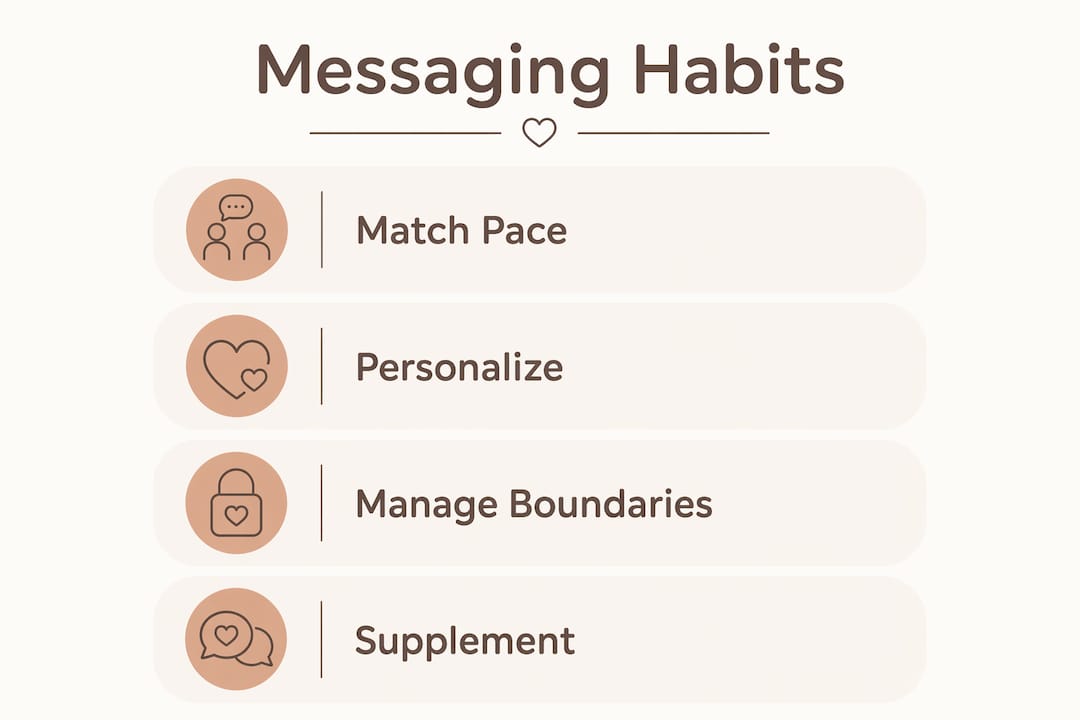
Personalization is the second lever. Inside jokes, callbacks to shared memories, and micronarratives, short two-line stories about your day, create a private world between partners. Revisitable shared expressions like recurring phrases or digital rituals build collective memory that supports relationship longevity. This is why a couple’s message history often feels like a relationship archive.
Boundary management is the third factor couples overlook. Messaging at 11:00 PM when your partner is asleep is not connection. It is noise. Setting soft agreements around response times and off-limit hours protects both partners from the anxiety that comes from unanswered messages.
| Messaging habit | Effect on intimacy |
|---|---|
| Warm, frequent check-ins | Builds emotional presence and daily connection |
| Sequenced, reply-inviting messages | Deepens continuity and co-performance |
| Micronarratives and inside jokes | Creates shared history and private language |
| Matching partner’s texting pace | Reduces friction and increases satisfaction |
| Reserving heavy topics for voice or in-person | Prevents misunderstanding and conflict escalation |
Texting works best as a supplement to in-person and voice communication, not a replacement. Couples who use thoughtful digital communication as one layer of a broader connection strategy report stronger bonds than those who rely on it exclusively.
Pro Tip: Build a small daily ritual around messaging. A consistent morning or evening message, even a single line, signals reliability and care. Reliability is one of the strongest predictors of felt security in a relationship.
Key takeaways
Instant messaging strengthens intimacy when couples prioritize message quality, reciprocity, and the right channel for each type of conversation.
| Point | Details |
|---|---|
| Quality over quantity | Warm, supportive messages predict satisfaction more reliably than high message volume. |
| Reciprocal sequencing | Frame messages as invitations to reply, not final statements, to build continuity. |
| Modality fit | Use text for light connection and logistics; switch to voice or in-person for conflict. |
| AI as tone support | AI calibrates emotional nuance without replacing genuine feeling. |
| Shared history matters | Inside jokes and micronarratives build collective memory that sustains long-term intimacy. |
What I’ve learned about text and real intimacy
Text-based intimacy gets dismissed too quickly by relationship traditionalists. The argument that “real” connection only happens face-to-face ignores how much emotional labor couples actually do through messaging every day. A well-timed message during a hard afternoon does something a weekly date night cannot: it shows up in the moment.
That said, I’ve seen couples confuse a full inbox with a full relationship. The message history grows, the in-person time shrinks, and both partners feel vaguely disconnected without knowing why. Text creates the feeling of closeness. It does not automatically create closeness itself.
The couples who use messaging well treat it as one instrument in a larger communication approach. They text for warmth and continuity. They call for emotional depth. They meet in person for conflict and repair. None of these modes replaces the others. Each does something the others cannot.
The detail most couples miss is the invitation structure. A message that ends with a question, a callback, or an open thread keeps the relationship moving forward. A message that closes the loop leaves both partners with nothing to build on. That single shift, from terminal reaction to open invitation, changes the texture of a relationship over time.
Texting also creates unexpected access for people who struggle to speak their feelings aloud. Shy partners, neurodivergent partners, and anyone who needs time to find the right words benefit from the safer space that text provides for intimate sharing. That is not a workaround. That is a genuine strength of the medium.
— Alan
Pingher makes daily connection easier for couples
Staying emotionally present through messaging takes intention. Most couples know what they want to say. The gap is in the doing: finding the right words, at the right moment, consistently enough to matter.
Pingher is built for exactly that gap. With one-tap functionality and AI-driven tone support, Pingher helps couples send personalized daily messages that feel genuine without requiring significant time or effort. The platform is designed for couples who want to express love and appreciation every day, not just on special occasions. Whether you are in a long-distance relationship or simply want to show up more consistently for your partner, Pingher gives you the tools to make emotional connection a daily habit rather than an occasional effort.
FAQ
What is the role of instant messaging in intimacy?
Instant messaging builds intimacy by enabling frequent, warm, and expressive communication that maintains emotional presence between partners across distance and daily life. Research links supportive texting styles directly to higher relationship satisfaction.
Can texting replace in-person communication in a relationship?
Texting supplements but does not replace in-person or voice communication. Experts recommend using text for light connection and logistics, and switching to voice or face-to-face interaction for emotionally sensitive topics and conflict resolution.
How does AI improve messaging in romantic relationships?
AI helps calibrate tone and phrasing so messages arrive with the intended emotional meaning. AI usage for relationship messaging rose 333% in the last year, with most users reporting clearer, more effective communication as a result.
What messaging habits most strengthen emotional intimacy?
Sending warm, reply-inviting messages, referencing shared history, matching your partner’s texting pace, and reserving heavy topics for voice or in-person conversations all strengthen emotional intimacy over time.
Is it bad to fight over text message?
Fighting over text is not automatically harmful, but it carries real risk. Context, attachment style, and topic sensitivity determine whether text-based conflict helps or escalates the situation. Sensitive or high-stakes conflicts are better handled in person or over a call.
Recommended
Built for couples who care.
Pingher helps you send the right words at the right moment.
Get Pingher on Google Play