Appreciation Rituals for Couples in Long-Term Relationships

Appreciation Rituals for Couples in Long-Term Relationships
Appreciation rituals for couples in long-term relationships are defined as consistent, intentional acts of gratitude and recognition that partners exchange on a regular basis to sustain emotional closeness. Relationship researchers call these “rituals of connection,” a term coined by The Gottman Institute to describe interactions built on three pillars: consistency, presence, and shared meaning. Gratitude practices increase gray matter in social bonding brain areas, which means the brain physically changes in response to regular appreciation. These rituals also buffer the corrosive effects of stress and conflict, acting as a protective layer around the relationship’s core. Couples who practice them report stronger emotional bonds and better navigation of hard seasons together.
Why do appreciation rituals build closeness in long-term relationships?
Appreciation rituals build closeness because they trigger oxytocin, the neurochemical most associated with bonding and attachment. Every time you genuinely acknowledge your partner, your brain releases this compound, reinforcing the emotional connection between you. Regular gratitude practices produce measurable changes in the brain’s social bonding regions. That is not a metaphor. It is a structural shift.
The human brain defaults to a negativity bias, meaning it registers threats and disappointments more readily than positive events. In a long-term relationship, this bias causes partners to notice what went wrong far more often than what went right. Appreciation rituals directly counter that pattern by training attention toward positive acts. Experts describe this as “spying” on your partner’s goodness, a deliberate practice of noticing what they do well before the brain files it as invisible.
“Appreciation is a discipline of attention. The couples who sustain it are not the ones who feel more grateful by nature. They are the ones who have decided to look.”
The Gottman Institute frames this through the concept of an emotional bank account. Small repeated acts of gratitude function as deposits into that account. Those deposits create a reserve of goodwill that couples draw on during conflict or stress. A relationship with a full emotional bank account recovers from arguments faster and with less lasting damage.
Rituals also interrupt habituation, the process by which familiarity causes partners to stop registering each other’s contributions. When you name what your partner did, you break the automatic “taking for granted” cycle. That act of naming is what keeps appreciation alive rather than theoretical.
What are the essential elements of effective appreciation rituals?
Effective appreciation rituals require three non-negotiable elements: consistency, emotional presence, and shared meaning. The Gottman Institute’s research confirms that couples with rituals built on these three pillars report stronger stress navigation and deeper emotional bonds. Remove any one of the three, and the ritual loses its power.
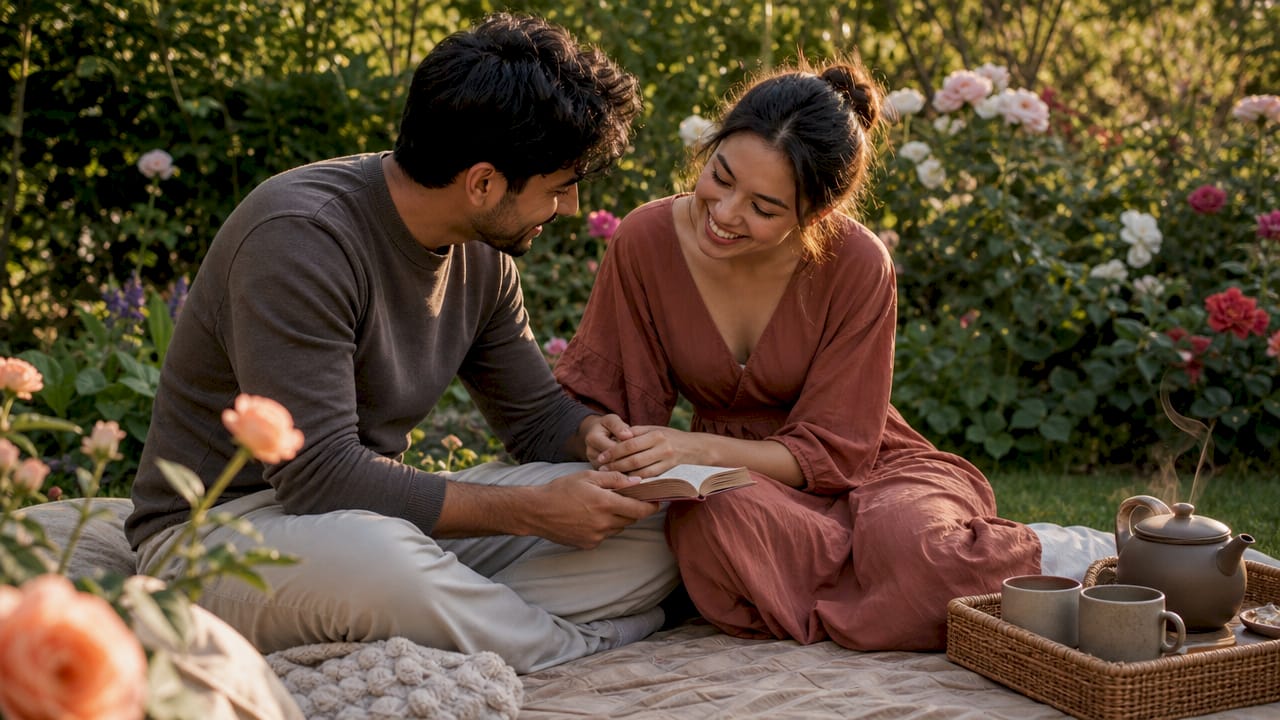
Consistency means the ritual happens regularly, ideally daily or near-daily. Frequency matters more than elaborateness. A brief, genuine acknowledgment every morning outperforms a grand gesture once a month. Consistency signals reliability, and reliability builds trust.
Emotional presence means you are actually paying attention when the ritual happens. Saying “I appreciate you” while scrolling your phone is not a ritual. It is noise. Authentic engagement, even for 60 seconds, communicates that your partner matters enough to hold your full attention.
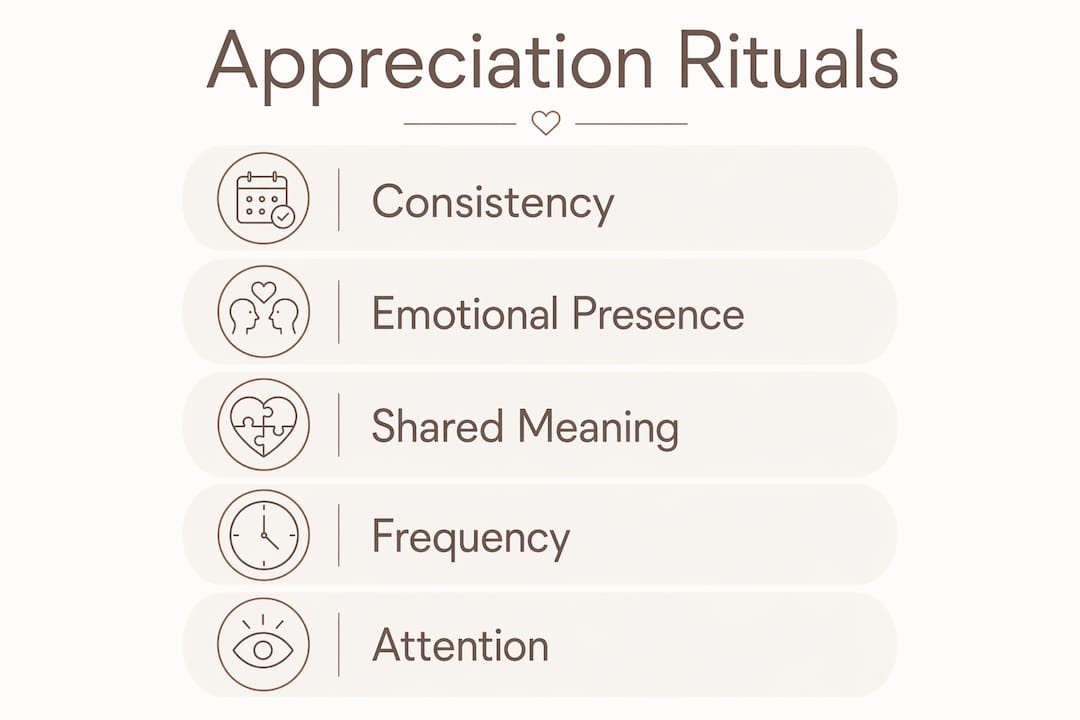
Shared meaning is the element most couples overlook. A ritual must feel symbolically relevant to both partners, not just practical to one. Rituals that carry symbolic meaning also signal safety to the nervous system. When a partner knows a ritual is coming, their body relaxes into it. That physiological security is part of what makes rituals effective.
Before any gratitude practice can take root, the relationship needs a baseline of emotional safety. Consider these prerequisites:
- Trust and honesty. Appreciation expressed in a climate of deception feels hollow and often backfires.
- Basic conflict resolution. Gratitude works best as a maintenance practice in stable relationships, not as a substitute for addressing real problems.
- Mutual buy-in. Both partners need to value the ritual. A one-sided practice creates resentment, not closeness.
- Low-pressure framing. Rituals that feel like homework die quickly. The practice should feel like a gift you give, not a box you check.
Tools that support effective rituals include shared journals, scheduled phone reminders, and platforms like Pingher, which lets couples send personalized appreciation messages with a single tap, removing friction from the daily practice.
How can couples implement daily appreciation rituals?
The most research-supported starting point is a structured three-step exercise developed at the University of Illinois. This ritual of appreciation reduces criticism, boosts emotional intimacy, and improves relationship optimism. Here is how it works:
- Make a list. Write down five to ten qualities you genuinely admire in your partner. Be specific: “patient with my family” beats “kind.” This list becomes your reference point.
- Observe daily. Each day, watch for one moment when your partner demonstrates a quality from your list. You are not inventing positives. You are training your eye to catch what is already there.
- Verbalize it. Before the day ends, tell your partner what you noticed and why it mattered to you. Specificity is what separates this from generic praise.
Beyond this structured exercise, the most sustainable rituals piggyback on existing habits. Attaching appreciation to something you already do every day removes the need for willpower. Consider these entry points:
- Morning coffee. While the coffee brews, share one thing you are grateful for about your partner that day.
- Bedtime check-in. Before sleep, each partner names one specific thing the other did that they noticed and valued.
- Shared meals. Use the first two minutes of dinner to exchange brief appreciations before conversation shifts to logistics.
- Written notes. Leave a short, specific note somewhere your partner will find it. Written appreciation carries particular weight because it is tangible and re-readable.
Pro Tip: Keep the verbalization under 60 seconds. Long speeches signal performance. Short, specific statements signal genuine attention. “I noticed you handled that call with your mom really gracefully today” lands harder than a two-minute monologue.
For couples who want to deepen the practice, a weekly or monthly gratitude conversation adds another layer. Set aside 15 minutes to reflect on what you appreciated about each other that week. This longer format lets partners share things that felt too significant for a quick daily mention. It also creates a ritual that both partners look forward to, rather than one that blurs into routine.
What common mistakes should couples avoid with appreciation rituals?
The most damaging mistake is treating the ritual as an obligation. Once appreciation feels like a chore, it communicates the opposite of what you intend. Your partner senses the difference between a genuine acknowledgment and a box being checked. The ritual then becomes a source of resentment rather than connection.
Watch for these specific pitfalls:
- Generic expressions. “You’re amazing” every day loses meaning fast. Specificity is what keeps appreciation credible. Name the act, not just the person.
- The habituation trap. Routine desensitizes perception of a partner’s contributions. If your ritual starts to feel automatic, change the format, the timing, or the medium to re-engage your attention.
- Using rituals to fix deep problems. Gratitude is a maintenance tool, not a repair tool. Couples dealing with broken trust, unresolved trauma, or chronic conflict need professional support, not more appreciation exercises.
- Inconsistency without recovery. Missing a day is not a failure. Missing a week without acknowledging it is. When the ritual lapses, name it, recommit, and restart without drama.
- Expecting immediate results. The emotional bank account fills slowly. Couples who quit after two weeks because they “don’t feel different yet” misunderstand how cumulative practices work.
Pro Tip: If your ritual starts feeling stale, try switching from verbal to written appreciation for one week. The change in medium forces you to think more carefully about what you want to say, which naturally restores specificity and sincerity.
Presence and consistency matter more than the content of any single expression. A brief, attentive acknowledgment every day does more for a relationship than an elaborate gesture delivered once a month with distracted energy.
Key Takeaways
Consistent, specific, and emotionally present appreciation rituals are the most effective daily practice for sustaining closeness and resilience in long-term relationships.
| Point | Details |
|---|---|
| Consistency beats elaborateness | A brief daily acknowledgment builds more trust than an occasional grand gesture. |
| Specificity makes appreciation credible | Name the exact act you noticed; generic praise loses meaning quickly. |
| Piggyback rituals on existing habits | Attaching appreciation to morning coffee or bedtime removes the need for willpower. |
| Gratitude maintains, not repairs | Use rituals to deepen a stable bond, not to substitute for resolving real conflict. |
| Presence is non-negotiable | Full attention for 60 seconds communicates more than a distracted five-minute speech. |
What I have learned after watching couples practice this for years
Couples who sustain appreciation rituals long-term share one trait that has nothing to do with personality: they treat noticing as a skill, not a feeling. They do not wait to feel grateful before they express it. They look for something worth naming, and the feeling follows. That sequence is the opposite of what most people expect, and it is the reason so many couples abandon gratitude practices too soon.
The couples who struggle are almost always the ones who start with elaborate rituals they cannot maintain. A weekly gratitude letter sounds meaningful until the third week, when life gets busy and the letter becomes a source of guilt. Starting smaller than feels necessary is almost always the right call. A single sentence at bedtime, repeated daily, compounds into something profound over months.
What I find most striking is how quickly emotional connection deepens once both partners feel genuinely seen. The ritual is just the mechanism. The real outcome is the experience of being noticed by the person who knows you best. That experience is what long-term couples are actually hungry for, and it costs almost nothing to provide.
Start with the three-step exercise. Do it for 30 days. Do not evaluate it at day seven. The compounding effect of consistent appreciation is real, but it is not fast.
— Alan
How Pingher helps couples keep appreciation consistent
Maintaining daily appreciation rituals is straightforward in theory and genuinely hard in practice. Life interrupts. Attention drifts. The ritual that felt natural in week one becomes easy to skip by week four.
Pingher is built for exactly this gap. The platform lets you craft a personalized appreciation message for your partner and send it with a single tap, so the ritual stays alive even on the days when time and energy are short. Pingher’s message reminders prompt you at whatever time fits your routine, whether that is morning coffee or the commute home. The result is a consistent daily practice that feels personal, not automated. Couples who want to strengthen their bond through daily appreciation will find Pingher removes the friction that kills most good intentions.
FAQ
What are appreciation rituals for couples?
Appreciation rituals are consistent, intentional acts of gratitude that partners exchange regularly to sustain emotional closeness. The Gottman Institute defines effective versions as interactions built on consistency, presence, and shared meaning.
How often should couples practice appreciation rituals?
Daily practice produces the strongest results. Brief, specific acknowledgments every day build the emotional bank account faster than elaborate but infrequent expressions.
Can appreciation rituals fix relationship problems?
Gratitude rituals are a maintenance practice, not a repair tool. They deepen connection in stable relationships but do not replace professional support for broken trust or unresolved conflict.
What is the easiest appreciation ritual to start with?
The bedtime check-in is the most accessible starting point. Before sleep, each partner names one specific thing the other did that day that they noticed and valued. It takes under two minutes and requires no preparation.
Why do appreciation rituals stop working over time?
Habituation causes partners to stop noticing each other’s contributions, which makes expressions feel automatic and generic. Changing the format, medium, or timing of the ritual re-engages attention and restores sincerity.
Recommended
Built for couples who care.
Pingher helps you send the right words at the right moment.
Get Pingher on Google Play